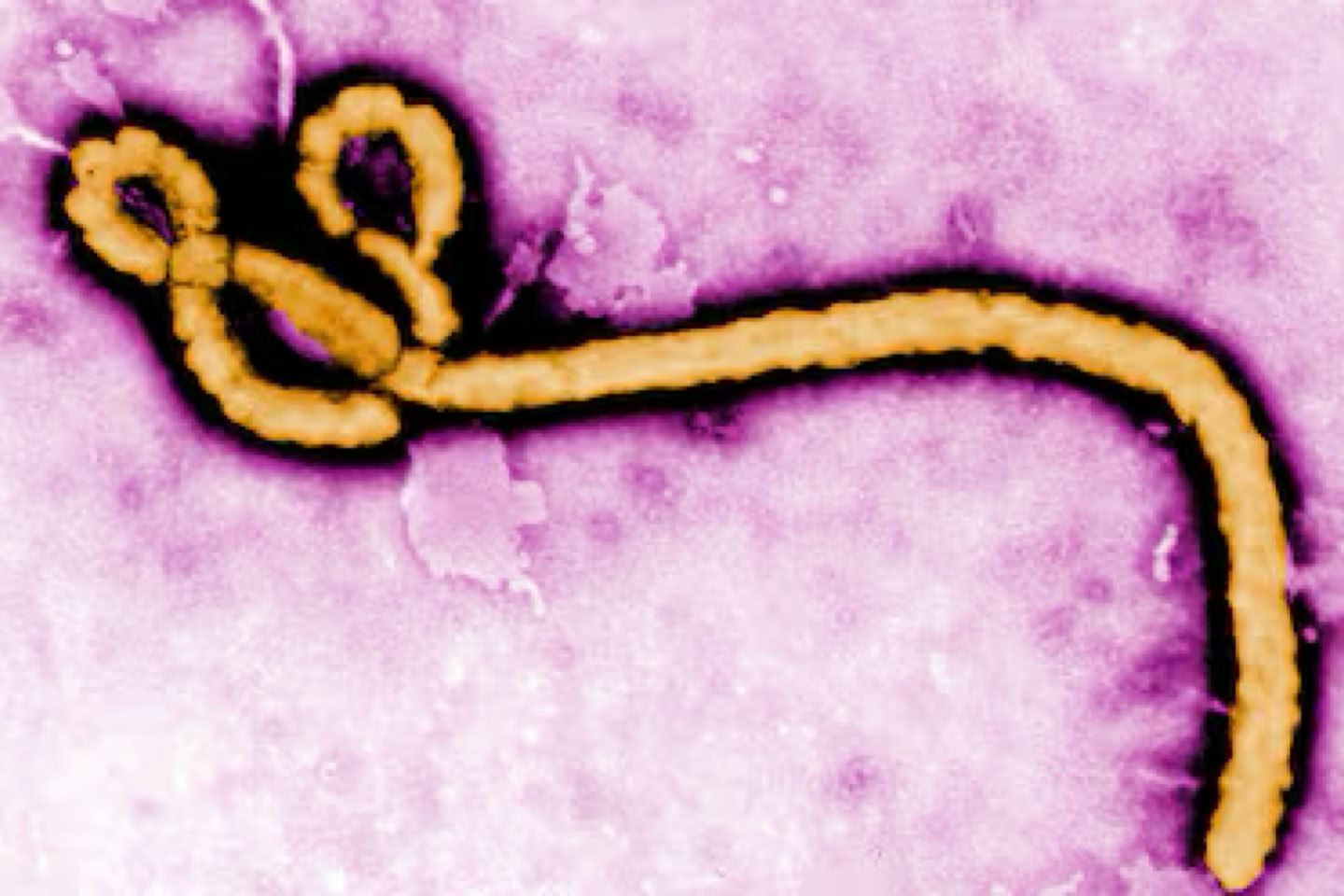
Public health emergencies are necessary responses to real threats — but history shows they also open doors that don't always close again.
On May 16, 2026, the World Health Organization declared the Ebola outbreak in the Democratic Republic of Congo a “Public Health Emergency of International Concern (PHEIC).” Within 48 hours of the announcement, international agencies were mobilizing funding, cross-border screening protocols were being activated, and governments across East Africa were implementing emergency preparedness measures.
NOTE: This post reflects the author's opinion. Readers should review primary sources and form their own conclusions.
Sound familiar?
It should. Five years ago, a similar cascade of institutional responses reshaped daily life for billions of people under the banner of COVID-19. Some of those responses saved lives. Others quietly redrew the boundary between public safety and public control — a boundary that has never fully been restored.
This is not a call to dismiss Ebola. With 80 suspected deaths, 246 suspected cases, and a strain — the Bundibugyo virus — for which no approved vaccine or treatment exists, the threat is real and serious. Nor is it a denial of the WHO's mandate or the genuine expertise of epidemiologists working in dangerous conditions in Ituri province. The people of Bunia deserve protection, resources, and international solidarity.
But citizens of every country — not just those in the affected regions — have earned the right to ask hard questions. Because we've seen this movie before.
The COVID Playbook, Revisited
When COVID-19 was declared a pandemic in March 2020, governments worldwide activated emergency powers with extraordinary speed. Lockdowns, vaccine mandates, travel bans, censorship of dissenting scientific voices, digital surveillance infrastructure, and economic interventions were all justified under the umbrella of public health necessity.
Some of these measures were proportionate. Many were not — and the evidence for their proportionality was often withheld, rushed, or simply assumed. Dissenting scientists were dismissed or deplatformed. Citizens who asked for data were labelled as anti-science. Parliamentary oversight was bypassed. Emergency powers enacted "temporarily" lingered for years.
The WHO itself was not without controversy. Its delayed declaration of COVID-19 as a pandemic, its deferral to Chinese authorities in the early weeks, and its evolving — sometimes contradictory — guidance on masks, schools, and transmission raised legitimate questions about institutional independence and political pressure.
Now, with a new PHEIC declared, the machinery is spinning up again. The WHO has already released $500,000 in emergency funding and deployed field teams. Cross-border screening is being activated across Uganda, South Sudan, and the DRC. The Africa CDC has called for activation of "national disaster and emergency-management mechanisms."
Each of these steps may be justified. But citizens should be watching — carefully.
The Architecture of Institutional Expansion
Public health emergencies create a structural opportunity for institutional overreach that is worth naming plainly. Emergencies compress timelines, justify bypassing normal deliberative processes, and generate public fear that makes scrutiny feel irresponsible.
This is not a conspiracy theory. It is a well-documented pattern in political science, public administration, and crisis sociology. Emergency powers have a gravitational pull toward permanence. Agencies expanded during a crisis rarely shrink back to their pre-crisis size. Surveillance infrastructure built to track a virus tends to find new applications. International coordination frameworks established under emergency conditions create precedents that shape future responses — often without democratic mandate.
The WHO's authority is an instructive example. Its declaration of a PHEIC carries no binding legal force on member states — but it exerts enormous normative pressure. It triggers donor funding, media amplification, and political urgency that can rapidly constrain the policy options available to national governments. Smaller and poorer nations, heavily dependent on international health funding, may find their sovereignty effectively constrained by institutional declarations made in Geneva.
This is not inherently illegitimate. But it requires scrutiny.
What Proportionality Looks Like
The antidote to institutional overreach is not reflexive skepticism — it is structured accountability. Citizens and their representatives should be asking:
a) Is the response proportionate to the documented threat?
The Bundibugyo strain has caused two prior outbreaks — one in Uganda in 2007 with 55 cases, one in Congo in 2012 with 57 cases. The current outbreak, with 246 suspected cases, is more severe. But the level of international mobilization should be calibrated to evidence, not to institutional momentum.
b) Are emergency measures time-limited and reviewable?
Any cross-border screening, emergency health regulation, or expanded surveillance should have explicit sunset clauses and parliamentary review mechanisms.
c) Is scientific dissent being tolerated?
One of COVID-19's most troubling legacies was the suppression of heterodox scientific voices. Independent experts — including those at major universities — who questioned lockdown efficacy or mask mandates were marginalized. A healthy response to Ebola must include open scientific debate, not managed consensus.
d) Who benefits institutionally?
Pharmaceutical companies, international health agencies, and national emergency management bureaucracies all expand their budgets, mandates, and influence during health crises. This is not proof of bad faith — but it is a reason for independent auditing and transparent governance.
The Citizen's Responsibility
None of this means ignoring Ebola. The people of Ituri province need resources, healthcare infrastructure, and international support — urgently. The logistical challenges of responding in a region ravaged by conflict, 620 miles from the capital, are immense. Healthcare workers on the ground deserve respect and support.
But solidarity with affected populations and vigilance about institutional power are not mutually exclusive. In fact, they are complementary. The best protection for vulnerable populations is a health response that is transparent, accountable, and genuinely focused on their welfare — not on institutional mandate expansion or geopolitical signalling.
The COVID era taught us that trust, once broken, is very hard to rebuild. Governments that bypassed consent, suppressed debate, and overstated certainty damaged public confidence in public health institutions in ways that will persist for a generation.
The Ebola outbreak offers an early opportunity to do things differently. To show that emergency declarations can coexist with parliamentary accountability. That cross-border coordination can be transparent. That scientific uncertainty can be communicated honestly.
Citizens should not wait to be told what to think. They should be asking, right now: What are the criteria for de-escalation? Who authorized these measures? What evidence supports them? And who is watching the watchmen?
The alarm bells are ringing. That's not the question. The question is — who gets to decide when to stop?